
A team of researchers from the university of Boston have reported their results to the New England Journal of Medicine, in which a new clinical trial successfully tested an artificial pancreas.
This test involved using a device implanted in type 1 diabetes patients that received both insulin and Glucagon (a hormone that elevates the blood sugar levels). To their delight, the device passed their expectations for its ability to automatically regulate blood sugar levels (preventing the 'sugar dump'), while also adjusting for both adults and teens, who require a larger amount of insulin.
"There is no treatment today capable of giving the results we've seen," says Dr. Edward Damiano of the University of Boston's Bio-Medical school of Engineering, and Head Researcher.
Protecting diabetes patients during the night
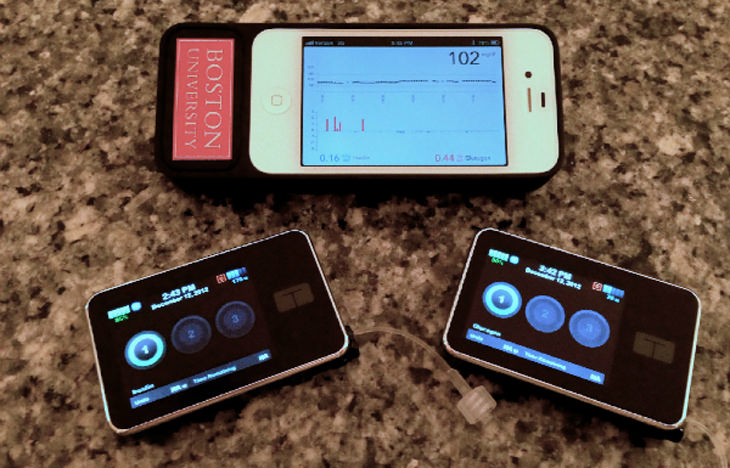
Ed has a personal stake in this. His 15-year-old son, David, has type 1 diabetes, and often his blood sugar drops in the middle of the night while sleeping, which can be deadly. This is why he and a colleague developed the 'bionic pancreas'. The device uses a sensor, an iPhone app and a special pump to deliver two materials: insulin, to lower blood sugar levels; and glucagon, which raises it. The pump, according to Damiano, works 24/7. "This is a relentless device, it doesn't take a vacation, it never goes to sleep," he adds.
Watch a video about the Bionic Pancreas' creation:
Protecting diabetes patients during the night
Ed has a personal stake in this. His 15-year-old son, David, has type 1 diabetes, and often has blood sugar drops, in the middle of the night while sleeping, which can be deadly. This is why he and a colleague developed the 'bionic pancreas'. The device uses a sensor, an iPhone app and a special pump to deliver one of two materials: Insulin, to lower the blood sugar levels, and glucagon, which raises it. The pump, according to Damiano, works 24/7. "This is a relentless device, it doesn't take a vacation, it never goes to sleep," he adds.
Ariana Koster has had type 1 diabetes since she was 11, and she is now getting outfitted for a bionic pancreas for the next phase of testing. "Just not having to worry about diabetes during the night is going to feel wonderful," she says.
Phase two of the test began yesterday and will take a year to complete. If all goes well, the device will be available to the public within 4 years. As for type II diabetes, the researchers believe it's definitely possible that it will help them as well, something they hope to look into during this year of testing.
Three parts
The bionic pancreas is made of three parts: two pumps, about cellphone size, that pump insulin and glucagon by need, and an iPhone wired to continuously monitor glucose levels. The components can be kept in a pocket or a fanny pack, and connect with three little needles that go under the skin, usually in the area of the belly.
The main advantage of the device, say the researchers, is its ability to free the patient from worrying about their disease all the time, and especially going to sleep without knowing if their blood sugar levels will drop to dangerous lows during the night.

Ariana Koster has had type 1 diabetes since she was 11, and she is now getting outfitted for a bionic pancreas for the next phase of testing. "Just not having to worry about diabetes during the night is going to feel wonderful," she says.
Phase two of the test began yesterday and will take a year to complete. If all goes well, the device will be available to the public within 4 years. As for type 2 diabetes, the researchers believe it's definitely possible that it will help them as well, something they hope to look into during this year of testing.
Three parts
The bionic pancreas is made of three parts: two pumps, about cellphone size, that pump insulin and glucagon by need, and an iPhone wired to continuously monitor glucose levels. The components can be kept in a pocket or a fanny-pack, and connect with three little needles that go under the skin, usually in the area of the belly.
The main advantage of the device, say the researchers, is its ability to free the patient from worrying about their disease all the time, and especially going to sleep without knowing if their blood sugar levels will drop to dangerous lows during the night.

The Sleep Benefits of Saffron are Now Backed by Science
A new study found that saffron has one more health benefit that is now confirmed - improving sleep.
Study Finds a Painless Way to Monitor Blood Sugar Levels
A new study found that continuous glucose monitors improve blood sugar control and quality of life in diabetes patients - pain-free.
Incredible Story: The Woman Who Can SMELL Parkinson's
In this piece, we'd like to introduce you to Joy's story, the series of events that led her to "encounter" Parkinson's disease, and its significance for the future of the medical world.
Fatty Liver: New Study Shows Enormous Transformation
A new clinical trial has found that the weight-loss drug Wegovy significantly improves a serious form of fatty liver disease in nearly two-thirds of patients
New Study: Are Washing Machines Hotbeds For Bacteria?
A report on an outbreak of a pathogen in a hospital in Germany discovers that washing machines may retain certain harmful bacteria
Alcohol Linked To More Cancer Types Than Previously Known
A new study found a clear correlation between alcohol consumption and more types of cancer than previously known.
10 Tech Products You Must Double-Check Before Buying
Beware! These tech products are most commonly faked.
9 Great NASA Inventions That Took the World By Storm!
For around six decades, NASA have been inventing top-notch products. Here are nine great examples!
5:39
Why Are Your Ears Ringing? The Causes Explained
Nearly 15% of the human population worldwide are plagued by this strange sensation, but most people don't know the causes behind ringing in the ears...
5 Puzzling Mysteries That Science Finally Managed to Solve
These weird occurrences have puzzled humanity for decades, if not centuries. Finally, scientists solved them & the solutions are exciting...
NVIDIA CEO Reveals Which Degree Is Worth Studying
Electrical Engineering, Computer Science, or Physics? Nvidia's CEO has a surprising answer to which area should be studied nowdays.
4:26
Despite Looking Similar, Cats Are MORE Diverse Than Dogs!
Who's more diverse, cats or dogs? This video answers this question once and for all, the it might surprise you...
6 Signs That Someone is Listening on Your Cellphone Calls!
With technology advancing all the time, there is the ever-increasing chance of our phones being tapped. Here are 6 signs that your phone could be tapped.
5:47
This Genius Child is a Better Calculator than a Computer
This ‘human calculator’ could likely outpace you entering the numbers into a calculator.
21:24
James Webb Telescope: Redefining Our View of Space
Here's a brief look at all the amazing discoveries made by the James Webb Space Telescope so far.
18:14
Are These Vintage Kitchen Gadgets Any Good?
Will any of the vintage kitchen gadgets stand the test of time or outperform their contemporary alternatives?
12:34
The World You See Doesn't Really Exist...
his video reveals how your brain constructs reality instead of simply perceiving it.

8:46
Science: What is Reality? Dive in and Find Out!
What if everything you see, feel, and experience isn’t real? The simulation argument suggests that our reality might be nothing more than an advanced computer program.

10:04
11 Practical Technologies That Will Help Fight Flooding
These amazing innovations will be real handy during a flood.
9:09
Protective Measures: How Our Body Reacts to a Tattoo
In this video, we’ll explore the microscopic war raging beneath your skin, where millions of your cells make the ultimate sacrifice to lock that ink in place, turning a defense mechanism into lifelong art.
4:57
The First 3D-Printed Hotel is Already Being Built!
s evidence of this, a groundbreaking project is nearing completion, in which a hotel is being printed, and tourists will soon be able to visit it. Curious to see what it looks like?
Study: New Link Found Between Parkinson's and the Gut
A recent study has identified gut microbes likely involved and linked them to decreased riboflavin (vitamin B2) and biotin (vitamin B7), suggesting a potential treatment
10 Obscure Inventions by World Famous Inventors
We’d like to bring your attention to 10 lesser-known inventions of famous figures in history, which will reveal a new and different side of these inventors to you.
4:57
Mjøstårnet - The World’s First Wooden Skyscraper
Mjøstårnet is an 18 story tall skyscraper towering over the Norwegian countryside. What makes it so special is that it's made entirely out of wood...
9 of the Greatest Unsolved Mysteries About the Universe!
The universe has been around for close to 14 billion years, but it still holds many mysteries that continue to perplex scientists. Here's 9 of them!
Nobody Believed These 5 Scientists, But They Were Right
These 5 scientists were shamed and ousted, or rudely ignored, although years later, their "crazy" theories turned out to be true...
4:20
Ever Wondered About How Our Minds Retain and Lose Memories?
Ever wondered why you can remember something from 20 years ago, but have difficulty remembering what you had for lunch the other day? Learn why here.
27:48
Fascinating: How are CPU Chips Made?
This is a comprehensive look at both the fabrication process and the workings of a microchip plant that makes CPUs for computers.
5:16
Fascinating: How Fast Does Our Brain Operate?
Ever wonder at what speeds our thoughts move?
These Materials are Strange Enough to Boggle Your Mind...
There are some materials in this world that totally defy scientific convention. From metals that melt in your hand, to a solid lighter than air, take a look.
8:48
Fascinating: What Around Us is Invisible?
The Invisible Things that Turn the World...
These 18 Photos Capture the Universe Like Never Before!
See the universe in a new light with these astonishing photos.
16:31
Why Building a Perpetual Motion Machine Is Impossible
Since the Middle Ages, scholars have been trying to build the mythical perpetual motion machine. Was it all in vain? Is it even possible to build such a machine?
4:45
Woah! Learning to Play Music Has This Effect on Your Brain
Learning how to play an instrument can do wonders for our brain...here's how!
0:55
China's G1 Robot is Showing Some Incredible Moves
The G1 is a new robot developed in China and in this video shows some amazing moves.
8 Jaw-Dropping Black Hole Facts to Warp Your Mind
These black hole facts will bend your mind!
56:12
What's the Largest Thing in the Universe?
In this video, we look into some of the mightiest structures in the known universe.
5:17
How Exactly Do We Hear? All is Revealed Here!
In this informative TED-Ed video, Douglas L. Oliver explains the complete science behind hearing.
12 Steps That Help to Explain Einstein's Famous Theory
Have you ever wondered what Einstein's Theory of Relativity is all about? If you have, here is an easy-to-understand explanation!
5:06
The Only Manmade Object That Will Last Forever
This copper discus contains 116 images we launched into space for aliens to see
5:22
Why Do You See Colors When You Rub Your Eyes?
Explore the science of afterimages, the visual illusions that linger in your vision following exposure to bright lights or images.
Science in 2025: 8 Developments That Could Change it All
Here are some of the most exciting trends in science and healthcare to keep an eye on.
10:11
10 Smart Home Gadgets You Didn’t Know You Needed
If you’ve ever wanted a smarter, more efficient home, these 10 gadgets might be exactly what you need.
5:01
The Truth About Folding Phones You Need to Know
Don’t buy a foldable without knowing this first.
8:28
Could These Signals Be A Sign of Extraterrestrial Life?
Scientists have recently picked up on a mysterious radio signal from space, and it could mean a lot - maybe even a sign from extraterrestrial life forms.
Whoa! Who Knew the Human Body Was Capable of So Much?
Have a look at these 17 intriguing facts about the human body that we can practically guarantee will leave you in awe.
What Your Phone Habits Say About Your Mental Health
These phone habits might indicate underlying anxiety—and paying attention to them could help you better understand your mental health.
To enable your Ad-Free Subscription, please fill the fields below
Your subscription was successful, now you can enjoy an ad-free experience!! Note: To make sure you get no ads, please make sure to log in to your account. If you are logged in already, then refresh the page. The subscription can be cancelled at any time.