
New experiments conducted on mice have indicated that restoring brain plasticity might hold the key to reversing age-related cognitive decline.
The experiments focused on inhibitory interneurons in the visual cortex. These sensory neurons have rarely been studied to date, however, they’re believed to be crucial to brain plasticity.
Mice at several key ages were used in the study, and this was important because the researchers wanted to track the decline in inhibitory brain cells as the mice aged. The research found that there was no significant age-related decline to speak of.
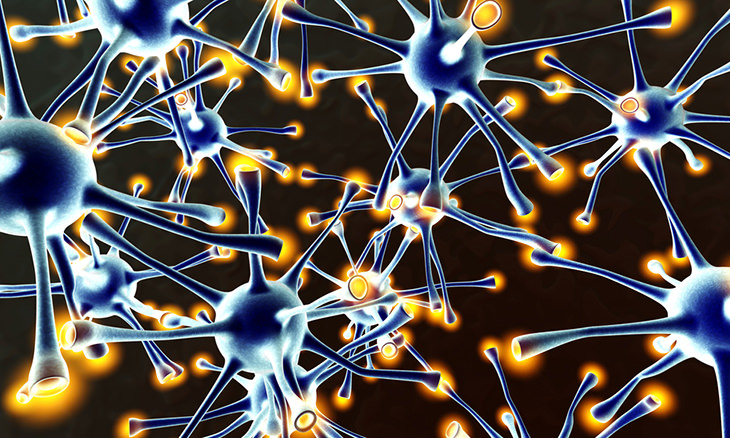
With that being said, the researchers did note a decline in several plasticity markers. The growth of dendrites, which are branches that connect neurons to each other, were observed to slow down progressively between the ages of three (when mice reach maturity) and 18 (when mice can be considered old) months. This is one of the key factors that prevents the brain from remodeling itself, thus reducing plasticity.
Another plasticity marker that was used for measurement is the stimulus-selective response potentiation. It essentially allowed the researchers to see how well the mice responded to visual stimuli, and they found that these responses declined with age. In fact, SRP measurements were solid for three months, but almost nonexistent by the time they reached nine months.
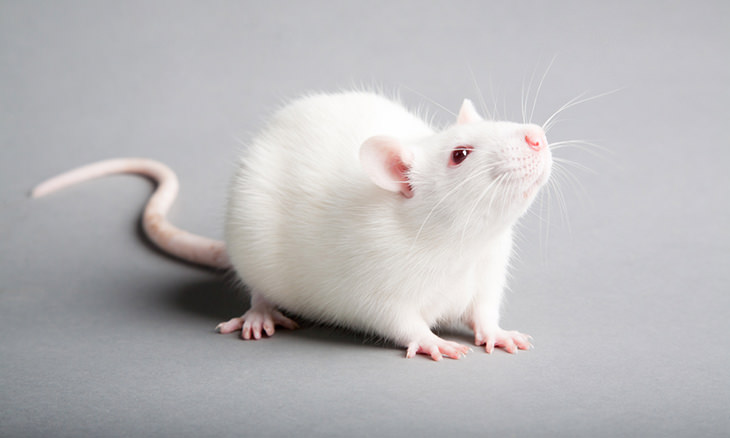
Last but not least, the researchers devoted the final part of the study to finding out whether plasticity reduction in the mice’s brains could be reversed. They used a drug called fluoxetine, which is more commonly known as Prozac, in three-month-old mice. They were treated with the drug for at least six months and displayed significant improvements in all plasticity markers.
"Our finding that fluoxetine treatment in aging mice can attenuate the concurrent age-related declines in interneuron structural and visual cortex functional plasticity suggests it could provide an important therapeutic approach towards mitigation of sensory and cognitive deficits associated with aging provided it is initiated before severe network deterioration," the researchers wrote.
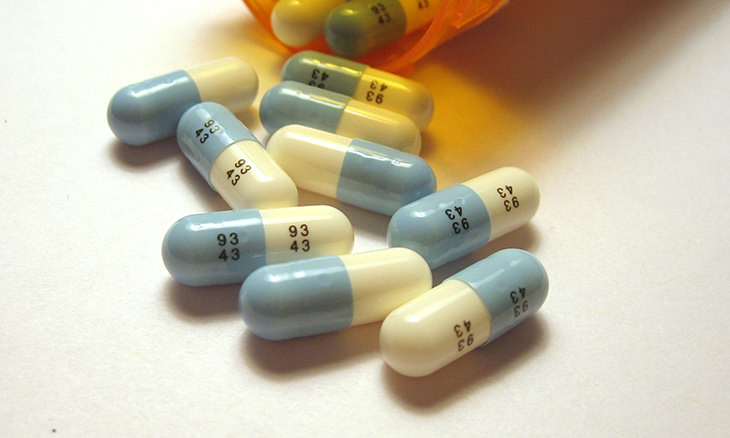
Although the new hypothesis for normal age-related decline is compelling, using fluoxetine as a therapeutic agent isn’t especially practical. For instance, its side effects mean that it isn’t recommended for use by the elderly, and it would have to be administered at a young age, and for a very long time, for it to have any effect. The latter points are also based on the assumption that the drug’s effects on mice could be replicated in humans, which would take years of clinical trials to prove definitively.
Nevertheless, the study found that a decline in brain plasticity has the potential to be reversed, meaning that age-related cognitive decline we’ve come to accept as just part of getting older might actually be able to be managed in the future.
Images by Deposit Photos.

Red Meat Allergens Can Increase Heart Disease Risk
Red meat has long been linked to heart disease, but a new study marks the first time that the allergens it contains can increase the risk of contracting it.
This Study Shows Where People Need to Be Touched
Touching is vital for human development in children, and it's also vital for the strength of familial and romantic relationships. Learn more here.


Study Finds a Painless Way to Monitor Blood Sugar Levels
A new study found that continuous glucose monitors improve blood sugar control and quality of life in diabetes patients - pain-free.
Marijuana Might Not Be As Harmless As Previously Thought..
Marijuana is being pushed as a harmless recreational drug around the world, but it might not be as harmless as previously thought thanks to this study.
Have Scientists Just Found a Wonder Cure for Alzheimer's?
In 2015, researchers in Australia made a breakthrough in the treatment of Alzheimer's. Hopefully this year, they will be able to try this treatment on humans.
Science Shows That Touching is Vital For Your Well-Being
Touching is vital for human development in children, and it's also vital for the strength of familial and romantic relationships. Learn more here.
Let's Learn All About Your White Blood Cells
White blood cells (WBCs) are the part of your immune system which is responsible for fighting infection. Learn all about them here!
Extraordinary Inventions By Tesla That Were Never Built!
Nikola Tesla was a scientist too advanced for his time. Here are some of the inventions he never had a chance to build.
10:11
10 Smart Home Gadgets You Didn’t Know You Needed
If you’ve ever wanted a smarter, more efficient home, these 10 gadgets might be exactly what you need.
8 Ancient Greek Scholars & Their Life-Changing Inventions
The foundations of modern medicine, engineering, biology, and astronomy were set up by these 8 stellar minds more than two thousand years ago.
TRIVIA: 25 Shocking Differences Between the Sexes
Did you know that there are some vast differences between the sexes? These 25 scientific facts will probably come as a big surprise to you, they did to me.
2:17:01
Astronomy: What is Beyond the Edge of the Universe?
In this video, we explore what modern astronomy reveals about the universe’s boundaries—if they even exist.
5:22
Why Do You See Colors When You Rub Your Eyes?
Explore the science of afterimages, the visual illusions that linger in your vision following exposure to bright lights or images.
Study: New Link Found Between Parkinson's and the Gut
A recent study has identified gut microbes likely involved and linked them to decreased riboflavin (vitamin B2) and biotin (vitamin B7), suggesting a potential treatment
14:34
What to Do (and Avoid) When Setting Up a Smart Home
Here's how you can set up a family-friendly smart home that will last long.
13:41
The 5 Most Important Fossil Discoveries from Last Year
2024 saw some really amazing fossil discoveries!
20:04
Emotions Explained: The Science Behind How We Feel
Neuroscientist and psychologist Dr. Richard J. Davidson answers some fascinating questions about emotions you would never expect.
22:52
Will AI Take Your Jobs? An Expert Explains the Future
Gonzaga University's AI professor Graham Morehead some of our most pertinent questions related to AI.
8:46
Science: What is Reality? Dive in and Find Out!
What if everything you see, feel, and experience isn’t real? The simulation argument suggests that our reality might be nothing more than an advanced computer program.
These Underwater Craft Are Changing Marine Science
Here's a look at the most remarkable machines currently expanding our understanding of the underwater world.
7 Mind Blowing Science Facts School Left Out
Put on your learning caps! We rounded up 7 surprising scientific facts you probably didn't learn at school.
8:12
How Humans Helped Cats Take Over the World
The relationship between humans and cats goes back as far as 9,500 years. How did it al start? And how did humans help cats essentially take over the world?
3:55
50 Years Later, We're Debunking the Moon Landing "Hoax"
How do we prove to people the moon landing was real? By answering their doubtful questions in this video.
4:57
Mjøstårnet - The World’s First Wooden Skyscraper
Mjøstårnet is an 18 story tall skyscraper towering over the Norwegian countryside. What makes it so special is that it's made entirely out of wood...
2:03:03
Full Documentary: From First to Last Dinosaur
With stunning visuals and cutting-edge science, we’ll bring their story to life—from their very first day to their last, a saga of survival, adaptation, and mystery.
Alzheimer's: What Recent Breakthroughs Have Taught Us
Now, you can discover 4 new studies that show how to do this in ways you haven’t heard of.
14 Retro Inventions That Stunned Crowds Back in the Day
These inventions were the talk of the town back in the day.
6 Harmful Toxins You Didn’t Know You Encounter Daily
These toxic chemicals can be found in everyday products and can be extremely dangerous to us.
5:47
This Genius Child is a Better Calculator than a Computer
This ‘human calculator’ could likely outpace you entering the numbers into a calculator.
8 Important Inventions That Were a Complete Accident
It might be interesting for you to learn that some very important scientific innovations were born as a result of an accident.
19:27
20 of the Most Infamous Tech Product Flops In History
Here's a look at some of the most infamous and biggest technology failures in recent history.
8 Jaw-Dropping Black Hole Facts to Warp Your Mind
These black hole facts will bend your mind!
4:45
Woah! Learning to Play Music Has This Effect on Your Brain
Learning how to play an instrument can do wonders for our brain...here's how!
1:14:42
Documentary: How Did Our Universe Come From Nothing?
Can “nothing” truly become “something”? In this video, we’ll dig into this mind-bending question.
15 Beautiful Carl Sagan Quotes on the Stars and the Cosmos
A look at some profound quotes on the universe by famous astronomer and cosmologist Carl Sagan.
2:41
Trick-Mousing is Such Adorable Entertainment...
Mice are much cleverer than most people believe, and they easily respond to training, as long as you use positive reinforcement, or in other words - reward them frequently for their behavior with food.
24:11
25 Game-Changing Megaprojects That Will Change Our World
These incredible megaprojects that are set to redefine our world in 2025.
Hubble Telescope: 35 Years of Incredible Photos
Exploring 35 years of reality-changing, universe-enhancing photos that opened the sights of outer space to us all.
16:31
Why Building a Perpetual Motion Machine Is Impossible
Since the Middle Ages, scholars have been trying to build the mythical perpetual motion machine. Was it all in vain? Is it even possible to build such a machine?
13 Forgotten Phone Designs That Were Too Odd to Survive
From pen-shaped dialers to phones that clipped onto your clothes, here’s a look at the most unusual phones ever made.
36:24
Ever Wonder How a Steel Locomotor Works?
Let’s take a closer look at the engineering behind these compact workhorses.
6:15
K2-18b: The Exoplanet That Might Host Alien Life
Astronomers have detected signs of posisble life in the atmosphere of exoplanet K2-18b.
These Materials are Strange Enough to Boggle Your Mind...
There are some materials in this world that totally defy scientific convention. From metals that melt in your hand, to a solid lighter than air, take a look.
Blood Test Breakthrough Transforms Leukemia Diagnosis
This research demonstrates that rare circulating stem cells in blood carry the same diagnostic information as bone marrow samples, enabling doctors to identify disease progression months before clinical symptoms appear.
What is the Troxler Effect and How Does it Affect You?
Learn about Troxler's effect and the optical illusions it creates in life.
5:17
How Exactly Do We Hear? All is Revealed Here!
In this informative TED-Ed video, Douglas L. Oliver explains the complete science behind hearing.
8:48
Fascinating: What Around Us is Invisible?
The Invisible Things that Turn the World...
To enable your Ad-Free Subscription, please fill the fields below
Your subscription was successful, now you can enjoy an ad-free experience!! Note: To make sure you get no ads, please make sure to log in to your account. If you are logged in already, then refresh the page. The subscription can be cancelled at any time.