
Some old people can remember things just as well as those nearly half their age. Due to their ability to stay sharp in old age, scientists have nicknamed them “super-agers.”
Several months ago, researchers discovered at least one physical basis for these differences that has to do with the thickness of the outer layer of their brains. However, in a small study published in October in the Journal PLOS One, Researchers decided to take a look at whether there was a social side to these differences as well.

Sure enough, after analyzing 31 super-agers over the age of 80 as well as 19 cognitively average people of the same age, they found that the super-agers tended to have more satisfying and high-quality relationships than their normal peers.
Emily Rogalski, an associate professor of cognitive neurology at Northwestern’s Feinberg School of Medicine and lead author of the study, stated that “you don’t have to be the life of the party, but this study supports the theory that maintaining strong social networks seems to be linked to slower cognitive decline.”
To come to their conclusions, the researchers had all the participants complete a standard questionnaire designed to assess their general happiness and level of life satisfaction. Despite getting similar scores to their peers, the super-agers stood out in terms of how they evaluated their friendships with others.
Rogalski goes on to state that “it’s not as simple as saying if you have a strong social network, you’ll never get Alzheimer’s disease. But if there is a list of healthy choices one can make, such as eating a certain diet and not smoking, maintaining strong social networks may be an important one on that list.”
Thanks to other research, scientists were already aware that the brains of super-agers were different – physically speaking – from normal brains belonging to people of the same age group. They’re slightly larger, especially in the outer cortex – the part of the brain that consists mostly of gray matter and is rich in neurons. However, what scientists didn’t know until a few months ago was whether that was because super-agers had bigger brains to begin with or if they were somehow protected from the decay that comes with aging.
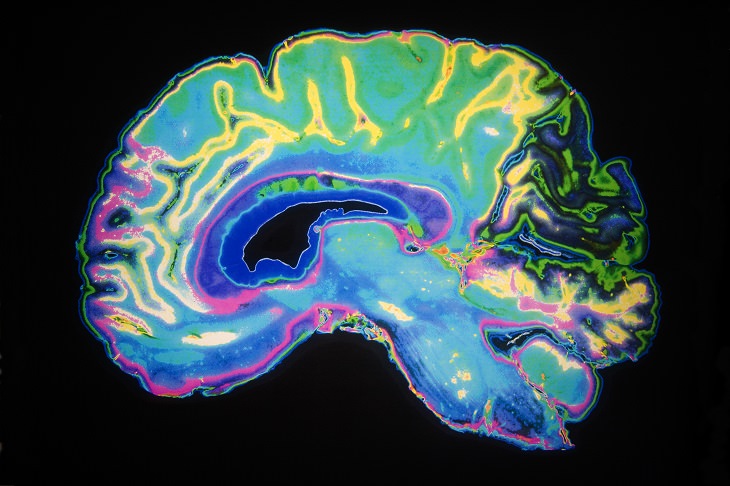
After comparing the brains of 24 super-ager men and women to those of 12 of their normal peers using MRI, the researchers found the answer came down to age-related shrinkage. Over the course of this 18-month study, the scientists saw the brains of the average study participants atrophy at more than twice the rate of the brains of the super-agers.
Together, the two recent findings add several important new pieces to the puzzle of what makes a super-ager – and provides insight into how age and social networks may affect the brains of regular people as well.
As we age, the gray matter in our brains – the stuff we rely on for seeing, hearing, processing emotions, learning new information, and exerting self-control – shrinks and degrades. So too does the brain’s white matter, which contains the complex web of twisting fibers that carry information across different parts of the brain.
A 2014 study published in the journal Nature Communications suggested that in some elderly people, white matter may act as a backup generator that can fire up when grey matter runs down. However, if this doesn’t occur, then the person experiences the typical effects of aging – fuzzy memory, difficulty learning new skills, and a harder time paying attention.
Super-agers are rare, but some research suggests that there are things we can all do to stay sharp as we age. This includes getting regular exercise, maintaining strong bonds with friends and family, quitting or not smoking, and making the effort to learn new things.
So, if you’ve been meaning to meet up with some old friends or have been putting off joining that yoga class, there’s definitely no time like the present!
Source: sciencealert
Images: depositphotos
Related Articles:
Here's How You can Live Much Longer
Four Vaccinations You Need After 50
Study Finds There’s No Age Limit to Start Strength Building Exercises

NASA Comes One Step Closer to Life on Mars...

NASA has recently announced that they have found organic compounds on Mars. Find out more here!
5:17
How Exactly Do We Hear? All is Revealed Here!
In this informative TED-Ed video, Douglas L. Oliver explains the complete science behind hearing.
Scientists Find Enzyme That Could End Aging and Cancer
Scientists have found an enzyme that they reckon could be used to slow down the aging process and eradicate cancer!
This is How You Can Bake the Perfect Cookies Every Time
Want to make the perfect cookie? Well, after reading this article, you'll be able to do so every single time you bake!
5:04
Ever Wondered How Hormones Work? Well, Wonder No More...
Ever wondered how hormones work? Well, wonder no more as this informative TED-Ed video explains all!
These 15 Things Have All Strongly Been Linked to Cancer
When it comes to deaths in the US, cancer is second only to heart disease. Here are 15 known and suspected carcinogens.
16:26
Neanderthals Had Strength and Skills Beyond Our Limits
Neanderthals possessed truly exceptional, almost unbelievable, traits.
These Theories About Reality & the Universe Will Stun You
You will be shocked to discover these 10 surprising theories of the universe and reality.
Will We Ever Solve Our Universe's Most Complex Mysteries?
Here are 8 of the biggest unsolved mysteries from the world of physics.
15 Beautiful Carl Sagan Quotes on the Stars and the Cosmos
A look at some profound quotes on the universe by famous astronomer and cosmologist Carl Sagan.
17:03
What is a Ballistic Missile and is Its Purpose?
Why is the ballistic missile so feared, and what exactly qualifies it as such - will all be explained in this informative video.
10:11
10 Smart Home Gadgets You Didn’t Know You Needed
If you’ve ever wanted a smarter, more efficient home, these 10 gadgets might be exactly what you need.
15:41
Keep Your Home Safe with These Handy Gadgets
These 13 devices will transform your home security.
8:12
How Humans Helped Cats Take Over the World
The relationship between humans and cats goes back as far as 9,500 years. How did it al start? And how did humans help cats essentially take over the world?
Hair Regeneration Could Be Possible With This New Process
Learn about an innovative new study which has revealed a novel treatment for effective hair regeneration.
9:34
Was Roman Concrete Really Superior to Our Own?
How did Ancient Romans make such durable concrete that it still lasts today?
5:47
This Genius Child is a Better Calculator than a Computer
This ‘human calculator’ could likely outpace you entering the numbers into a calculator.
6:47
7 Exciting Physics Tricks You Have to See!
Watch these seven remarkable physics tricks in this exciting and fun video.
14:58
Why IS Fentanyl So Dangerously Addictive?
In this video, we break down what opioids really do to your brain and body, what using them actually feels like, and why so many people are dying from Fentanyl overdoses.
27:48
Fascinating: How are CPU Chips Made?
This is a comprehensive look at both the fabrication process and the workings of a microchip plant that makes CPUs for computers.
10:59
Fascinating Science: How Sand is Turned Into Glass
Have you ever looked through a window and wondered how it was made from simple beach sand? This video shows you that incredible process.
2024's Biggest Breakthroughs in Science We Must Celebrate
These recent scientific breakthroughs could change the world.
What is the Troxler Effect and How Does it Affect You?
Learn about Troxler's effect and the optical illusions it creates in life.
Chronically Late? What Science Has to Say About You
There are 8 positive things that science says about late people that we all need to know.
4:57
Fascinating: How Does Our Digestive System Work?
This video explains how the human digestive system does its daily.
12 Bizarre Scientific Facts You Never Learned at School
The scientific facts we collected in this list aren't the kind of stuff you'll see in a school curriculum.
3:55
50 Years Later, We're Debunking the Moon Landing "Hoax"
How do we prove to people the moon landing was real? By answering their doubtful questions in this video.
5:06
The Only Manmade Object That Will Last Forever
This copper discus contains 116 images we launched into space for aliens to see
9 Great NASA Inventions That Took the World By Storm!
For around six decades, NASA have been inventing top-notch products. Here are nine great examples!
2:11
Here are Some Unique Tricks You Can Do at Home With Salt!
This video shows us a few interesting magic tricks that you can do anytime using salt, ice, and other items you can find at home.
Science Proves: These 10 Bible Stories Probably Did Happen
The Bible describes many seemingly supernatural cases, but today, science can show that they might have indeed happened.
22:52
Will AI Take Your Jobs? An Expert Explains the Future
Gonzaga University's AI professor Graham Morehead some of our most pertinent questions related to AI.
56:12
What's the Largest Thing in the Universe?
In this video, we look into some of the mightiest structures in the known universe.
TRIVIA: 25 Shocking Differences Between the Sexes
Did you know that there are some vast differences between the sexes? These 25 scientific facts will probably come as a big surprise to you, they did to me.
These 18 Photos Capture the Universe Like Never Before!
See the universe in a new light with these astonishing photos.
1:14:42
Documentary: How Did Our Universe Come From Nothing?
Can “nothing” truly become “something”? In this video, we’ll dig into this mind-bending question.
5 Puzzling Mysteries That Science Finally Managed to Solve
These weird occurrences have puzzled humanity for decades, if not centuries. Finally, scientists solved them & the solutions are exciting...
Space Looks Breathtaking in These Amazing Photographs
There are some absolutely stunning photographs of space out there today, You won't believe how incredible it is!
13 Astonishing Things You Never Thought You'd See
Here are 13 photos of rare phenomena you never thought you'd see!
8:46
Science: What is Reality? Dive in and Find Out!
What if everything you see, feel, and experience isn’t real? The simulation argument suggests that our reality might be nothing more than an advanced computer program.
5:50
The Rise of the Machines: Can Humanoid Robots Help Us?
Will humanoid robots change the way we work forever?
The Most Remarkable Medical Breakthroughs of 2024
Here’s a look at some breakthroughs in medical innovation this year.
18:21
Fascinating: How Do Cats TRULY See Humans?
Understanding a cat's world is the key to strengthening your bond. Let's decode your cat's mind!
4:49
This Video Shows You a Different Way to Look at the World
You’ve heard of the fourth dimension but do you know what it is? This TED-Ed video helps uncover a bit of the mystery.
4:52
Neon Lights: a Beautiful Union of Science and Art
Neon signs are a beautiful blend or artistry and science, and knowing the history and the science behind them make them even more exciting
These Underwater Craft Are Changing Marine Science
Here's a look at the most remarkable machines currently expanding our understanding of the underwater world.
3:02:59
Like Science Mysteries? Enjoy This Giant Compilation!
In this video, we unravel the greatest unsolved mysteries of physics.
To enable your Ad-Free Subscription, please fill the fields below
Your subscription was successful, now you can enjoy an ad-free experience!! Note: To make sure you get no ads, please make sure to log in to your account. If you are logged in already, then refresh the page. The subscription can be cancelled at any time.